Recycling and Sustainability for Landscaping Haringey
 Landscaping Haringey is shaped by a practical commitment to recycling, resource efficiency, and lower-impact working methods. Every project creates a mix of green waste, soil, hard landscaping offcuts, packaging, and occasional metal or timber remnants, so a responsible landscaping service in Haringey needs a clear sustainability plan from the outset. The aim is not simply to remove waste, but to keep as much material as possible in circulation through sorting, reuse, and recycling. Our target is to recycle or divert from landfill 90% of all suitable project waste, while continuing to improve the quality of material separation across every job.
Building a Smarter Recycling Culture
Across the borough, waste separation has become an important part of everyday environmental practice. A well-run Haringey landscaping recycling approach reflects the same principle: different waste streams should be separated early, handled carefully, and sent to the right local processing route. Green cuttings, branches, and turf are kept apart from inert waste such as soil and rubble, while clean timber, plastic packaging, and metal components are sorted for specialist recovery. This mirrors the borough’s wider emphasis on recycling at source, where households and businesses are encouraged to separate recyclables rather than mix them with general waste.
Local Transfer Stations and Efficient Sorting
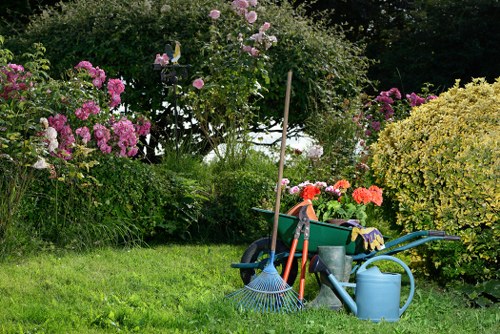 For landscaping projects in and around Haringey, local transfer stations play a vital role in keeping journeys short and waste handling efficient. By using local transfer stations, materials can be weighed, assessed, and dispatched to the correct recovery facility more quickly than if they were moved long distances. This helps reduce fuel use and supports a lower-carbon workflow. In practice, this means green waste can be directed toward composting or mulch production, while soil and hardcore may be routed for aggregate recovery where appropriate. The result is a more sustainable landscaping Haringey service that reduces unnecessary transport and supports local circular economy systems.
Just as important is the discipline of load preparation. Vehicles are packed so that recyclable green waste is not contaminated by mixed debris, and materials are stored in designated sections on site whenever possible. That attention to detail makes a real difference, because clean loads are more likely to be recovered efficiently. For example, trimmed hedging, grass cuttings, and small prunings can often be processed into composted material, while clean stone or brick fragments may be suitable for re-use in construction-related applications. These methods help ensure the recycling rate stays high without compromising safety or quality.
Partnerships with Charities and Reuse Networks
 A strong sustainability policy also looks beyond recycling alone. Some landscaping materials still have a useful life after a project is complete, and that is where partnerships with charities become valuable. Through charitable partnerships, surplus planters, garden furniture, paving offcuts, timber sleepers, and healthy plants can be passed on for community use where suitable. This reduces waste and helps local groups, schools, community gardens, and regeneration projects access useful materials at low cost or no cost. Such reuse-first thinking is an important part of sustainable landscaping in Haringey, because it prioritises value retention before disposal.
What Can Be Reused or Recycled?
Many items from a landscaping project can be recovered if they are separated correctly. Examples include:
- Green waste such as grass, leaves, hedge trimmings, and small branches
- Hard materials like soil, stone, brick, and concrete rubble
- Metal fixings, rails, and fittings that can be sent to metal recycling
- Clean timber and untreated wood suitable for reuse or material recovery
- Cardboard, packaging, and selected plastics used for deliveries
Low-Carbon Vans and Lower-Emission Transport
 Transport is often one of the largest contributors to the carbon footprint of landscaping work, so vehicle choice matters. Low-carbon vans, including newer fuel-efficient models and cleaner alternatives where operationally suitable, are used to reduce emissions from travel between sites, depots, and transfer stations. These low-carbon vans support the wider sustainability goals of landscaping Haringey by cutting fuel consumption and improving air quality impacts across local streets. Route planning is also key: combining pickups, reducing empty runs, and scheduling deliveries intelligently all help keep the overall carbon burden lower.
Where appropriate, tools and equipment are also chosen with energy efficiency in mind. Battery-powered tools can be used for certain tasks, reducing reliance on petrol engines and limiting noise as well as emissions. This creates a cleaner working environment and aligns with the borough’s growing focus on greener, more efficient urban maintenance. Together with careful recycling practices, these transport changes make the whole operation more resilient and climate-conscious.
Measuring Progress and Improving Outcomes
 A recycling and sustainability plan should be measurable, not just aspirational. Monitoring the amount of waste collected, the proportion recycled, and the destinations of different waste streams makes it easier to improve performance over time. The current target for landscaping recycling in Haringey is to reach at least 90% diversion from landfill for suitable waste, with a strong emphasis on reusable materials and cleaner separation at source. This target reflects a practical commitment to environmental responsibility and continuous improvement.
Ultimately, a sustainable Haringey landscaping approach is about making thoughtful choices at every stage: selecting the right transfer station, separating material properly, supporting charities through reuse, and using low-carbon vans to cut transport emissions. When these actions are combined, the result is a service that supports local biodiversity, reduces waste, and contributes to a cleaner borough. Recycling is not an extra step here; it is part of the way the work is planned, delivered, and improved over time.